Sometimes, the answer is close to home.
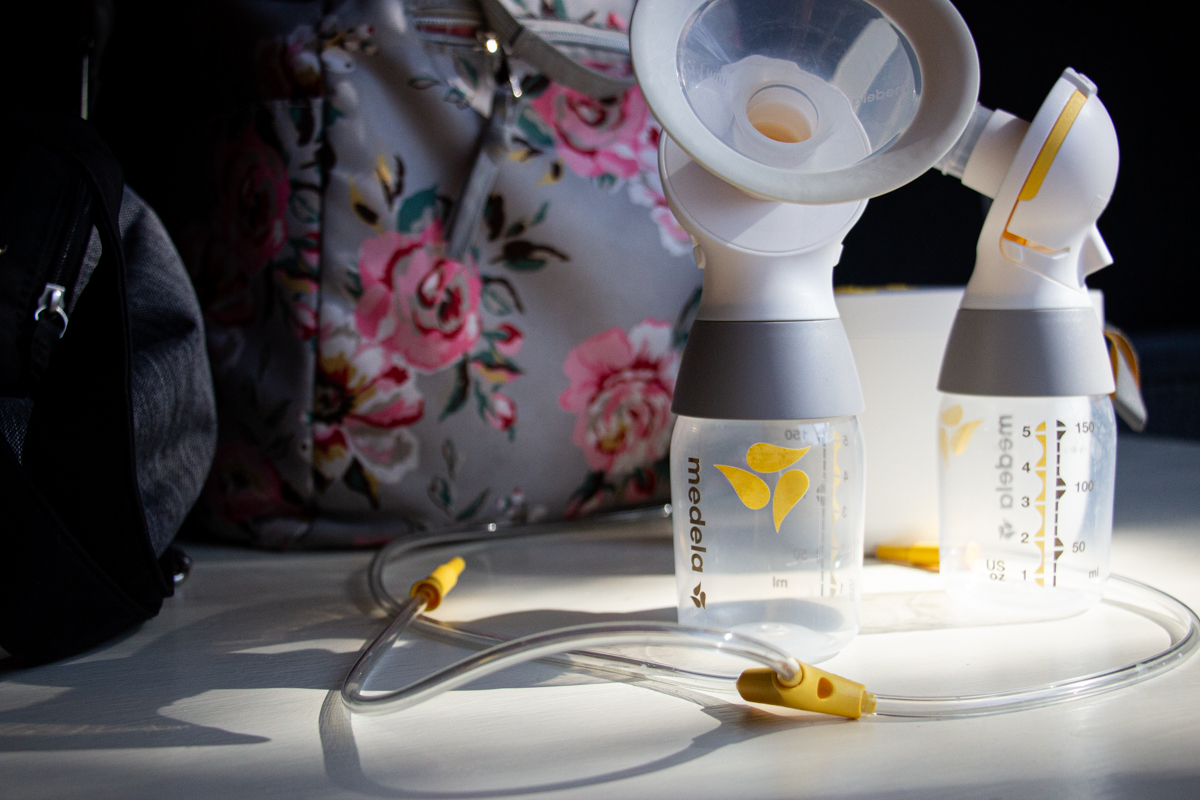
I’ll go ahead and give away the answer: the breast pump was in the duffel bag. If this story were a game of Clue, the secret cards would reveal the weapon as oversized blue luggage, the location of the crime as my very own walk-in closet, and the suspects as two parents under the influence of a deep memory fog. My husband and I discovered this crucial answer well after bedtime, about 3 hours into our search for the breast pump in question — the very breast pump that we intentionally packed for the hospital about a week earlier. In the past, we might have stayed up a bit late to laugh about our forgotten preparations over a beer or bowl of ice cream — luxuries long ago abandoned. Sleep, in this case, would be its own reward. If it ever came.
How did we get to this point — this indulgence-free place of sleepy duffeling? Allow me to explain: Let’s go back to mid-August of 2025. I was roughly 28 weeks pregnant, entering the third trimester of a pregnancy so far characterized by relentless nausea and vomiting. Sometime around week 18, these symptoms began to ease, a change that brought about more energy and food options. But all of that was about to change as I underwent my glucose screening and made a visit to the sleep clinic.
Let’s start with the glucose screening; a standard procedure to test for gestational diabetes by seeing how the body handles sugar during pregnancy. Bad news came right up front during this process. I failed the initial one-hour test, and though I was rattled, I held out hope for a better outcome during the more rigorous 3-hour test. But as I would learn, my placenta was hellbent on sabotage. It was already revved up with the right level of hormones to keep me kneeling over the toilet constantly without medication. Turns out, it was also poised to block my body’s otherwise effortless ability to produce insulin. Gestational diabetes was inevitable for me.
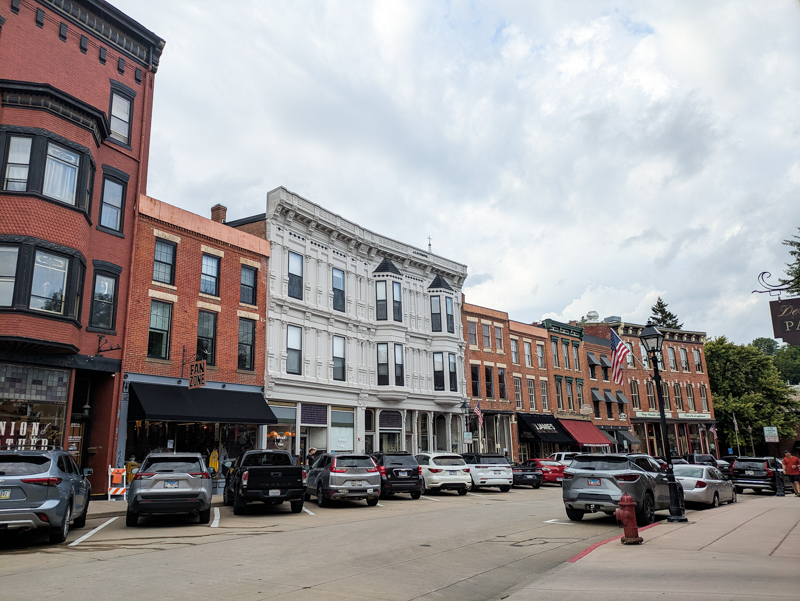
Despite my usual anxiety, I actually took this news in stride. We had a trip planned, as we so often do — one last 4-day excursion to Galena, Illinois, before baby’s arrival in October. There would be none of the usual ice cream or sweet lattes, but at least I would have the chance to learn my new diet surrounded by fun distractions and interesting restaurants. I used our time on the road to conduct online research and develop a low-carb, high-protein — yet somehow still vegetarian — diet plan. I felt like I was in control.
Based on conversations with my doctors and my own online research, I’ve learned that sleep apnea is common and underdiagnosed during pregnancy. It’s important for pregnant people to report symptoms to their doctors, especially if they’re experiencing other risk factors. Increased body mass, for example, puts pregnant people at risk. Sleep apnea in pregnancy is also associated with an increased risk for hypertension and gestational diabetes. I was battling a classic trifecta.
As important as it is to identify and treat sleep apnea, I have no intention of sugar-coating my treatment experience. It was a disaster. I received very little information about the relationship between pregnancy and sleep apnea from my sleep clinic. Instead, I was sent down the same track as anyone else with a sleep apnea diagnosis. I was prescribed a C-PAP machine, along with the insurance requirement that I use it at least 4 hours a night for 70 percent of the rest of my life. Or, at least, until my symptoms resolved. And I was given very little hope of such an outcome. In the blink of an eye, I had hopped on the chronic condition train. C-PAP and I were to be best buds for a good, long time.
As I write, Halloween is just a couple weeks past. So, on with the Freddy Krueger metaphors. For someone with anxiety and claustrophobia, sleep apnea and C-PAP created the perfect nightmare. Sleep was terrifying. I very quickly lost the ability to benefit from any peace overnight. Sleeping with the C-PAP mask brought breathless horror and panic. And sleeping without it came with fears for my baby’s health, as well as my own.
Weeks went by, and I couldn’t get used to the feeling. I repeatedly woke up with the rigid face covering, its elephantine tubing, and all of its spidery trappings clutched in my hand, after unknowingly ripping them off mid-sleep. Everything I read online told me this anxiety would dissipate over time. I waited, and it didn’t. Nightly, I paced the floor, and daily, I did my best to survive on roughly three broken hours of sleep.
You might be wondering if I grew desperate enough to ditch the C-PAP altogether. If the sleep apnea were affecting only me, I almost certainly would have. But the thought of my baby losing oxygen in the night terrified me. I had trouble tracking down a clear answer as to how sleep apnea impacts babies in-utero, but the limited information I uncovered left me very uneasy. Multiple sources link sleep apnea in pregnancy to a higher risk of pre-term birth, and one study links untreated sleep apnea with developmental delays. So, as you can imagine, I did my best to wear the damn mask as much as possible.
Comparatively, gestational diabetes was much easier to cope with. But its consequences crept up in the background. High blood sugar readings tend to worsen as pregnancy progresses, at least until the final few weeks. I faced an uphill battle trying to control my blood sugar through diet alone. I was prescribed insulin, and this came with four new injections a day (silly me, thinking I was done with injections after my last round of IVF), along with four finger pricks. Then, there was the need to monitor for low blood sugar.
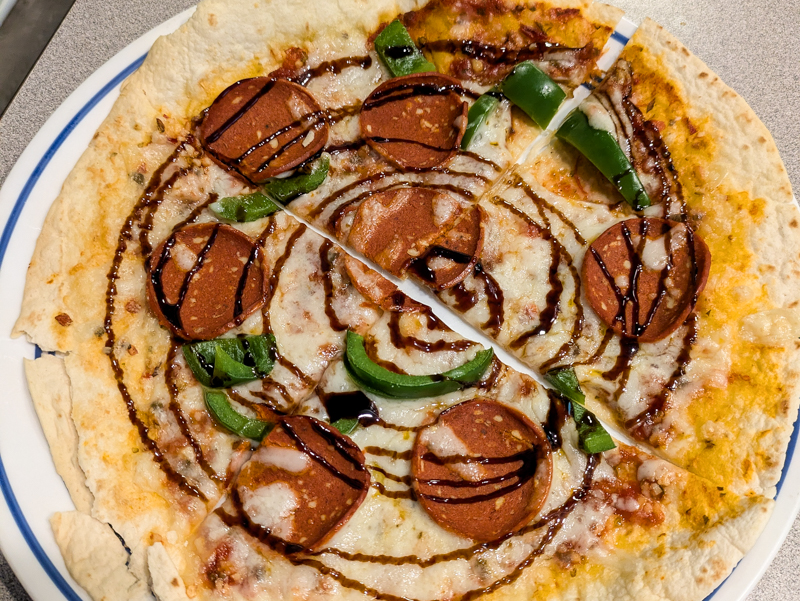
Restless in the throes of health-related anxiety, I tried to live my life as normally as possible, despite my gradual transformation into a hungry, tired zombie. I kept up with my volunteer work as best I could, prepared the nursery, and planned outings to shop for baby necessities. During these outings, my husband would drive aimlessly when my mandatory afternoon snack time arrived, as I puzzled out which drive through would produce some workable vegetarian morsel with the right amount of protein and no more than 20 carbs.
At home, I battled impromptu couch naps and prepared strange meals. I tried to concentrate with a lopsided, fizzled out brain. Life felt like a nonsense maze that would somehow end with our new baby. I hoped I would be coherent and functional when the time came.
Which brings us back to the point where we started: In a moment of lucidity one night, I suggested my husband pack my breast pump in his hospital bag, in case the baby came early. We were looking forward (at this point, desperately) to a planned c-section on October 20, but anything could happen in the weeks beforehand. We both promptly forgot packing it, and found ourselves flabbergasted by its absence.
In a state of confusion, we tore into every storage tote in the basement, including totes we set aside for our next garage sale, in case it was accidentally waylaid. We researched the price of a new one but realized none would ship in time. There were tears. My husband suggested I use my new, portable Willow breast pumps instead — a reasonable thought. But in my mental shambles, I insisted on using a pump I was familiar with in my first few weeks. I knew I was on the edge of falling apart completely, and the loss of my familiar, mechanical breastfeeding companion was strangely too much to bear. As was the loss of familiar food, familiar sleep patterns, and a familiar, well-functioning body.
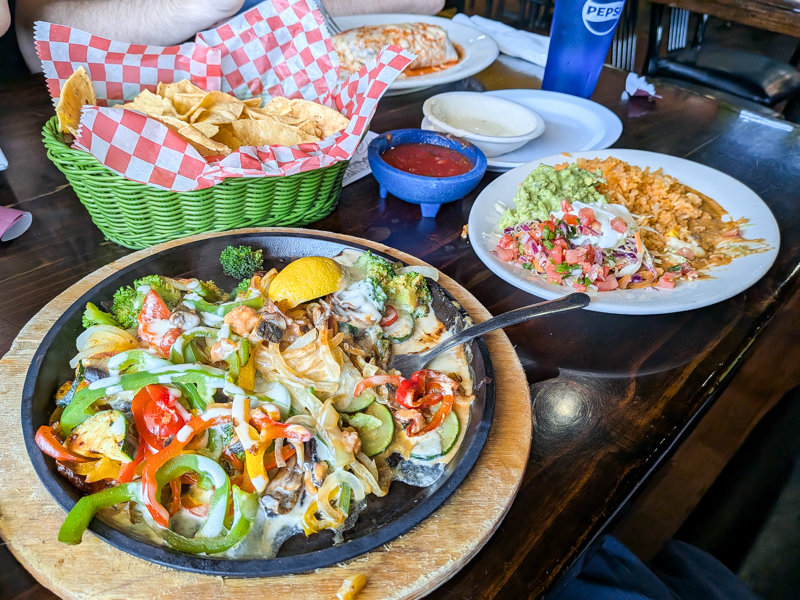
That’s what it came down to: an overwhelming wave of unfamiliarity. I needed the breast pump to be where I remembered storing it the same way I needed my puffy, bloated face to look like me again. The way I needed to eat a basket of carby tortilla chips and queso. The way I needed to lay on my pillow and feel the cares of the world slip away without fear.
Often, pregnancy is a big change one seeks out. In my case, we sought it out relentlessly. But desired change is an upheaval all the same, especially when it comes with unexpected plot twists like diabetes and sleep apnea. If there’s a moral to this story, it’s got to do with embracing contradictions. You can desperately want a thing that nearly drains the life out of you. Discomfort and hope can coexist. Discomfort can even eclipse hope in dark moments. It did for me, but my baby still arrived as perfect as ever. I was an anxious mess, and I was elated. I waded through a difficult recovery on the same timeline as my genuine, joyous celebration.
And miraculously, familiarity came back — with the addition of precious new life woven throughout. As I recovered from my difficult pregnancy, the complications I experienced began to loosen their grip. The C-PAP machine has been set aside, at least for now, as my sleep apnea symptoms have diminished. I no longer take my blood pressure regularly. And the infamous breast pump currently sits in its place of honor on an end table by the couch. It’s on its last legs. I suspect it might give out on me before my breastfeeding journey ends, leaving me with just the new set of pumps. And, you know what? I’m finally settled enough to be ok with something new.